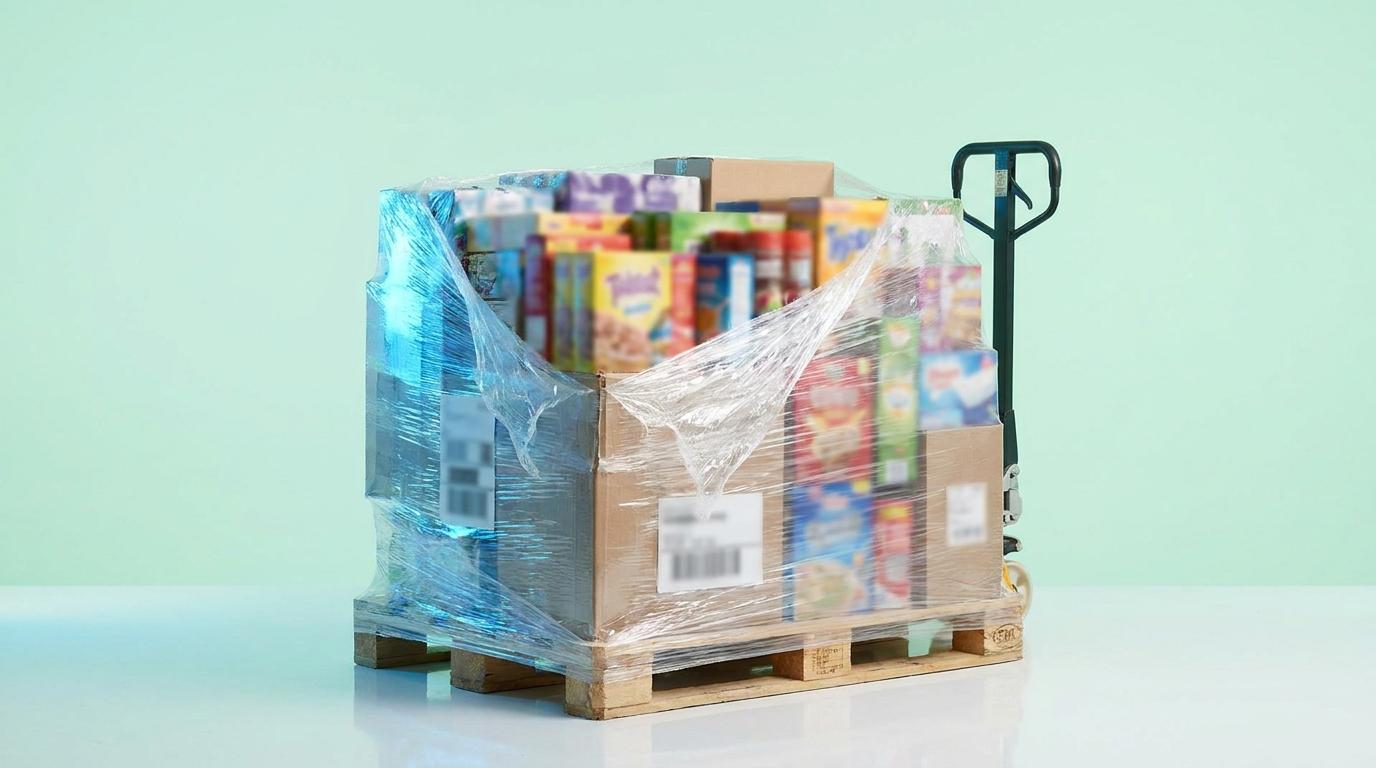
BULQ is gone. It stopped taking final orders on July 28, 2025, and yet a lot of 2026 advice on where to buy liquidation pallets still recommends it like nothing happened.
That tells you plenty about this search result page. It is crowded with supplier roundups written by people who have never paid a liftgate surcharge, never had tax charged on a buyer’s premium, and never learned that a cheap pallet can get expensive before the truck even arrives.
This guide sticks to what is confirmed as of November 2026: the legit liquidation pallet sources, the fees that actually move margin, and the paperwork that now matters as much as your bid.
Where to buy liquidation pallets in 2026: the short list
If you want the honest answer, the market has narrowed.
Most serious buyers end up in one of six lanes:
- B-Stock for retailer auctions and direct retailer storefronts
- Liquidation.com for broad auction volume, with more fee-reading required than most buyers realize
- Amazon Bulk Liquidations Store if you can get in and can live with its restrictions
- Via Trading if you want a lower-friction way in without business credentials
- 888 Lots if you want smaller-batch buying with a resale certificate required up front
- ResaleOS if your real problem starts after the pallet lands and you need one system for crosslisting, storefront, shipping, consignor splits, and in-person selling
That last one is different in kind, but it belongs in the comparison because buying inventory is only half the job. If pallet sourcing creates operational mess faster than profit, the software stack matters just as much as the supplier list.

Where to buy liquidation pallets: the fee table that matters
Hammer price is not your cost. It is the opening lie.
Your real number is purchase price plus buyer’s premium, plus any sales tax that applies, plus freight, plus the accessorial fees that show up when delivery turns out to be less straightforward than the listing implied.
| Source | Buyer’s premium | Minimum / starting point | Credential requirement | Important gotcha |
|---|---|---|---|---|
| B-Stock Supply & retailer marketplaces | 10% standard on B-Stock Supply; private storefronts typically 5%–10% | Starting bids typically $100; minimum lot size 1 pallet up to truckload | State resale certificate required for approval; AK, DE, MT, NH, and OR exempt from sales tax certificate requirement | Wire transfer required within 2 business days of auction close |
| Liquidation.com | 5%–11%; general lots commonly 11% or tiered 10% by category | Auction-based | Resale certificate needed on file to waive tax | Sales tax applies to winning bid plus buyer’s premium unless approved in advance; late payment penalty is 15% of lot price or $200, whichever is greater |
| Amazon Bulk Liquidations Store | $0 | Fixed-price pallet sales | Amazon Business account in contiguous U.S.; ATEP enrollment required | Closed beta / invite-only; no returns; terms prohibit relisting liquidated inventory directly on Amazon marketplaces |
| Via Trading | Not stated as a buyer’s premium in the source materials | $0 minimum spend | No business license or resale certificate required to buy | Consumer sales tax charged unless resale certificate is provided |
| 888 Lots | Not stated as a buyer’s premium in the source materials | $100 minimum; single-item ordering up to full lots | Active account and valid state resale certificate strictly required | Smaller-batch access is useful, but onboarding is not casual |
| ResaleOS | $0 buyer’s premium | $1 for the first 30 days, then Crosslister $39.99/mo; Reseller $89.99/mo; Pro $219.99/mo | No resale certificate required to use the software | Not a pallet marketplace; it solves the intake, listing, delisting, shipping, POS, and consignor side after you buy |
Sources as of November 2026: B-Stock buyer FAQ, Liquidation.com tax exemption documentation, Amazon Bulk Liquidations Store terms on amazon.com, Via Trading, and 888 Lots.
Where to buy liquidation pallets without getting tricked by fake math
This is the part most guides skip because it ruins the headline price.
A lot that closes at $500 on B-Stock is not a $500 lot. On standard B-Stock Supply terms, it is $500 plus a 10% buyer’s premium before freight. On some private retailer storefronts it may be 5% to 10%, which means you do not get to assume one universal B-Stock number across every marketplace.
Liquidation.com is where buyers get clipped harder because the fee stack is easier to miss. Buyer’s premium runs 5% to 11%, with general lots commonly at 11% or tiered 10% by category. Then comes the real gotcha: unless your resale certificate is approved in the Tax Exemption Portal before bidding, sales tax is assessed on the winning bid and the buyer’s premium.
That means bad admin can cost you money before you make a bad buying decision.
And none of that includes freight. The common landing pattern, as reflected in current platform terms, is simple: hammer price plus 10% to 11% premium in many cases, plus tax on both where applicable, plus LTL liftgate or residential surcharges that can run $150 to $350 or more.
If you buy pallets often enough, this is why your spreadsheet starts lying to you. Not maliciously. Just by omission. If you are still tracking intake, COGS, listing status, and sell-through off tabs and memory, read Your Reseller Spreadsheet Is Lying to You. Pallet volume does not make a messy operation cleaner.
B-Stock vs Liquidation.com: my verdict as of November 2026
For anyone comparing b-stock vs liquidation.com, here is the blunt version.
B-Stock is easier to reason about. Standard B-Stock Supply buyer’s premium is 10%, and private retailer portals usually land between 5% and 10%. Starting bids are typically $100. Lot size starts at one pallet and can go up to full truckload. The tradeoff is operational: payment is by wire transfer within 2 business days, and a state resale certificate is required for approval, with the named exception states being AK, DE, MT, NH, and OR.
Liquidation.com is broader, but easier to misread. The platform’s 5% to 11% buyer’s premium structure is less intuitive, and the tax-on-premium rule is the kind of thing that quietly changes margin if your paperwork is not set before bidding. It also has a late payment penalty of 15% of the auction lot price or $200, whichever is greater. That is not a warning. That is a bill.
| Question | B-Stock | Liquidation.com |
|---|---|---|
| Buyer’s premium clarity | Usually easier: 10% standard on B-Stock Supply; storefronts often 5%–10% | More variable: 5%–11%, often 11% on general lots or tiered 10% by category |
| Tax gotcha | Resale certificate required for approval | Tax assessed on winning bid plus premium unless exemption approved before bidding |
| Payment pressure | Wire within 2 business days | Late payment penalty of 15% of lot price or $200, whichever is greater |
| Best fit | Buyers who want retailer-direct style auctions and cleaner fee expectations | Buyers willing to read terms carefully and manage tax setup before they bid |
If you forced me to choose one for a disciplined operator, I would rather start with B-Stock and learn the auction rhythm there. Fewer moving parts in the fee story usually means fewer self-inflicted wounds.
Amazon return pallets are not one thing
This is where half the internet faceplants.
There are at least two conversations people mash together when they say “Amazon return pallets.” One is Amazon inventory sold through B-Stock auctions. The other is the direct Amazon Bulk Liquidations Store.
Those are not the same buying lane.
The Amazon Bulk Liquidations Store, as of November 2026, is a closed beta for Amazon Business accounts in the contiguous U.S. It uses fixed-price pallet sales, not auctions. There is $0 buyer’s premium. You have to be enrolled in the Amazon Tax Exemption Program, or ATEP. Sales are final, and the terms prohibit relisting liquidated inventory directly on Amazon marketplaces.
That last part matters. If your whole plan is “buy Amazon returns, sell them back on Amazon,” that plan is dead on arrival in this lane.
So where does that inventory go instead? Usually everywhere else: eBay, Whatnot, Mercari, Shopify, local store traffic, booths, live sales, and your own storefront. The good units get listed widely; the odd units get moved fast; the hopeless units become a lesson in sourcing discipline.
If you run that kind of mixed-inventory cleanup operation, this is exactly where software either saves you or creates a second job. ResaleOS, which we make, starts at $39.99/month for the Crosslister plan, with $1 for the first 30 days. That includes unlimited sales channels with automatic delisting when an item sells anywhere, unlimited AI cataloging from photos, 200 cross-listing exports per month, unlimited consignors with commission splits and payout tracking, a branded ecommerce storefront, label printing, and shipping support from USPS, UPS, and FedEx through freight and white-glove. If you also sell in person, the $89.99/month Reseller plan adds full POS, receipt printing, custom domain, consignor portal, vendor or booth mapping with rent tracking, 500 exports per month, and 3 team seats. If you need the full channel list, here are all supported platforms.

BULQ alternatives in 2026: where former BULQ buyers went
For anyone searching bulq alternatives, here is the plain answer.
BULQ ceased intake on July 25, 2025 and took final orders on July 28, 2025 at 5:00 PM ET. The domain no longer operates an active marketplace. That part is settled. Advice that still lists BULQ as a current source in 2026 is outdated.
Where did former BULQ buyers go?
- To B-Stock, if they wanted volume and retailer-auction access
- To Liquidation.com, if they wanted broad marketplace supply and could tolerate more fee complexity
- To 888 Lots, if they liked smaller-batch ordering and had the resale paperwork ready
- To Via Trading, if they wanted lower barriers to entry
The point is not nostalgia. It is fit.
BULQ appealed to buyers who wanted something closer to manifested simplicity. Since that lane disappeared, the market has sorted into stricter credentialed platforms on one side and easier-access suppliers on the other. You now have to decide which pain you prefer: tighter onboarding or fuzzier economics.
The resale certificate is now the real gatekeeper
Years ago, the headline gatekeeper was money. In 2026, it is paperwork.
B-Stock requires a state resale certificate for approval, with the named sales-tax-certificate exceptions in AK, DE, MT, NH, and OR. 888 Lots strictly requires an active customer account and valid state resale certificate for onboarding. Liquidation.com makes the cost of sloppy admin obvious: if your exemption is not approved before bidding, tax gets applied to the winning bid plus the premium.
Via Trading is the outlier here. You do not need a business license or resale certificate to purchase, though consumer sales tax is charged unless you provide one.
So if you are a hobbyist searching for where to buy liquidation pallets with zero setup, your lane is narrower than most articles admit. Via Trading is the main exception in this brief. Everyone else increasingly assumes you are a real operator, not a curiosity click with a garage and a dream.
That is not bureaucracy for sport. It is tax compliance catching up with a chaotic niche. The same trend shows up on the selling side too. As of 2026, the federal Form 1099-K threshold is $20,000 and 200+ transactions. The IRS guidance is here: Understanding your Form 1099-K.
If your operation is moving from “I flip a few things” to “I need inventory records I can defend,” that transition usually happens faster after your first pallet than before it.
How to spot fake liquidation pallet sites before they get your wire
The scam pattern is boringly consistent.
Fake sites lean hard on brand names, unreal discounts, urgency, and impossible simplicity. They also avoid the annoying details legit suppliers always have: tax setup, onboarding friction, freight ambiguity, payment deadlines, category exclusions, and final-sale terms.
That means the green flags are often the very things new buyers hate:
- Real credential checks
- Published fee structures
- Explicit resale-certificate policies
- Auction or account terms with penalties and deadlines
- Restrictions that make the inventory less magical, not more
If a liquidation source sounds too clean, trust it less.
I would rather buy from a marketplace that tells me “wire payment due in 2 business days” than one that promises “instant access to premium Amazon pallets” with none of the adult paperwork. One sounds like logistics. The other sounds like a wire fraud warm-up.
My buying advice, if you are doing this for profit
Start smaller than your ego wants.
If you are new, I would rather see you buy one manageable lot from a legit source and learn the true landed cost than buy a truckload because the per-unit math looked great in your head. Freight, condition spread, missing parts, testing labor, disposal, and slow movers all get louder after delivery.
Match the source to your operating model:
- B-Stock if you want retailer-linked auctions and can handle wire deadlines
- Liquidation.com if you read terms carefully and will not get lazy with tax setup
- Amazon Bulk Liquidations Store if you have access and a non-Amazon downstream sales plan
- Via Trading if you need lower-friction entry
- 888 Lots if you want smaller orders and already have your resale certificate in order
Then deal with the second half of the job: turning that mixed inventory into cash without losing it in intake, mispricing it, or selling it twice.
That is where ResaleOS earns its place in this conversation. It is the only tool in this category that combines crosslisting with a full retail operating system: crosslisting, automatic delisting, AI cataloging, storefront, shipping, label printing, consignor splits, POS, hardware support, vendor or booth tracking, and team workflows in one stack. A solo closet seller who will never need POS or consignors can start cheaper on a dedicated crosslister; everyone else should think hard before building a business on a crosslister plus POS plus spreadsheet pile.
If you are scaling past a closet, or you also sell in person, or you manage consignors, ResaleOS is built for the handoff from sourcing chaos to an operation you do not outgrow. If double-selling is already biting you, start with The Auto-Delist Problem: Why Crosslisting Tools Double-Sell.
Frequently asked questions
What is the best place to buy liquidation pallets in 2026?
For most serious buyers, the best-known legit options as of November 2026 are B-Stock, Liquidation.com, Amazon Bulk Liquidations Store, Via Trading, and 888 Lots. The best one depends less on headline deals and more on whether you can meet the credential requirements, handle the payment terms, and survive the real landed cost.
Is BULQ still in business in 2026?
No. BULQ ceased intake on July 25, 2025 and took final orders on July 28, 2025 at 5:00 PM ET. It no longer operates an active marketplace.
Do you need a resale certificate to buy liquidation pallets?
Usually, yes. B-Stock requires a state resale certificate for approval. 888 Lots strictly requires one for onboarding. Liquidation.com needs your exemption approved before bidding if you want to avoid tax on the winning bid plus buyer’s premium. Via Trading is the main exception here, allowing purchases without a business license or resale certificate, though consumer sales tax applies unless you provide one.
Is Amazon Bulk Liquidations the same as Amazon pallets on B-Stock?
No. Amazon Bulk Liquidations Store is Amazon’s direct fixed-price, closed-beta program for eligible Amazon Business accounts in the contiguous U.S. B-Stock runs separate auction marketplaces, including inventory streams people often lump under “Amazon pallets.” They are different channels with different rules.
Why do liquidation pallets cost more than the bid price?
Because the bid is only the start. Depending on the source, your cost can include a 5% to 11% buyer’s premium, sales tax on the bid and sometimes the premium, plus freight and delivery surcharges like liftgate or residential fees. Buying right is only half the job. The margin shows up when you can receive, label, list, delist, route, and sell mixed inventory without losing it in a death pile. If that is the part straining your business, see ResaleOS or the supported platforms page to see how we handle crosslisting, storefronts, POS, consignor splits, and fulfillment in one system.