
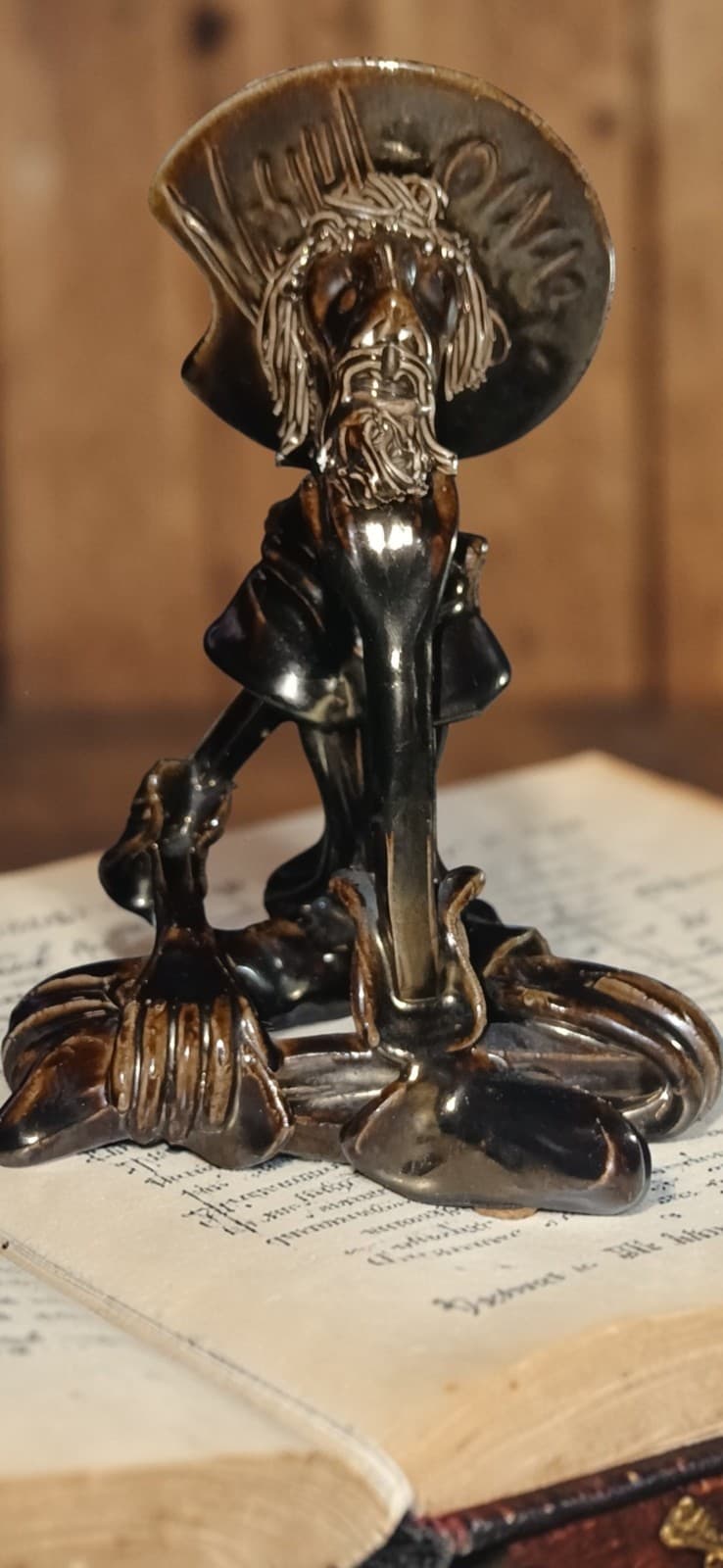
Knight
Vintage Don Quixote Ceramic Bronze Metallic Glaze Spanish Knight Sculpture
$64.99
Pickup in-store from Alvin, Texas, 77511
As soon as Today
- HEIGHT
- 8.5 Inches
- WIDTH
- 5 Inches
Vintage ceramic figurine depicting the legendary Spanish knight Don Quixote. This expressive mid-century sculpture features exaggerated features, a large traditional hat, and flowing beard finished in a rich metallic bronze glaze.
The piece appears to be studio pottery and is signed under the brim of the hat. A classic decorative sculpture inspired by the famous literary character from the novel Don Quixote by Miguel de Cervantes.
Condition: good vintage condition with normal wear consistent with age.
Perfect for collectors of literary figures, Spanish décor, or mid-century ceramic art.
The glaze style
Your figurine has a metallic bronze drip glaze that shifts between:
-
dark chocolate brown
-
coppery bronze highlights
-
lighter gold on raised details
That exact glaze combination was heavily used by Spanish art potteries in the 1960s–70s, especially decorative pieces made for export.
Two workshops collectors often connect with this style are:
-
Cerámica de Manises
-
Lladró (though yours is a different style than their porcelain)
Manises-area studios produced a lot of Don Quixote sculptures, because the character is a Spanish cultural icon.
The glaze style
Your figurine has a metallic bronze drip glaze that shifts between:
dark chocolate brown
coppery bronze highlights
lighter gold on raised details
That exact glaze combination was heavily used by Spanish art potteries in the 1960s–70s, especially decorative pieces made for export.
Two workshops collectors often connect with this style are:
Cerámica de Manises
Lladró (though yours is a different style than their porcelain)
Manises-area studios produced a lot of Don Quixote sculptures, because the character is a Spanish cultural icon.
The sculpting style
Your Don Quixote has exaggerated features:
-
extremely long nose
-
rope-like hair strands
-
very stylized mustache
-
elongated legs and boots
This caricature style was common in Spanish tourist art pottery from the 60s–70s. These were decorative pieces meant for living rooms, bars, and libraries.
The horse-head element at the base is also a common Manises-era design motif.
The hidden signature
The incised signature under the hat brim is the biggest clue.
Spanish studio potters often hid signatures in places like:
-
under hat brims
-
under cloaks
-
along bases
It helped preserve the sculpture’s appearance while still marking the artist.
Even if the name isn’t readable, the presence of a hand-incised mark usually means:
✨ studio-made rather than mass molded